60 Million Dollars in Distressed Property Sales Closed Here in Two Years.
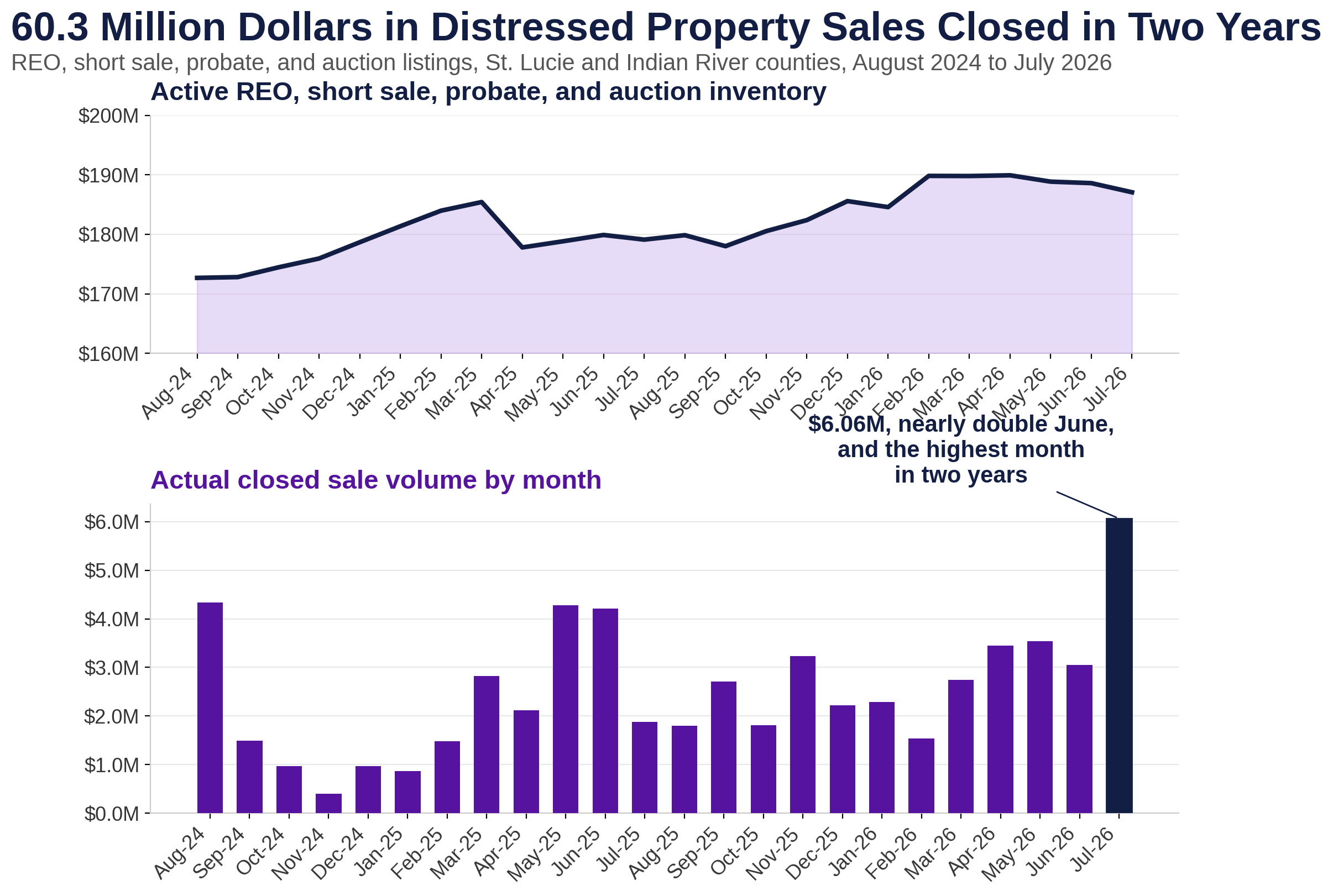
Over the last two years, buyers in St. Lucie and Indian River counties have closed on more than 60 million dollars in REO, short sale, probate, and auction properties, real deals, real closings, in a category most people assume barely moves. July 2026 alone saw 6.06 million dollars close, nearly double June and the strongest single month in the entire two year period.
At the same time, there’s a substantial pool of inventory sitting active in these categories at any given moment, typically somewhere between 170 and 190 million dollars in combined listing value across both counties. That’s a lot of below market opportunity, and most of it never makes it to the front page of Zillow or Realtor.com. These properties, bank owned homes, short sales, auctions, and probate sales, live in their own corner of the market, and they come with their own rules.
That’s why I built a live search tool that pulls directly from BeachesMLS and shows every current St. Lucie and Indian River listing in these categories, updated continuously, not once a week or once a month.
Click to view image
What these categories actually mean
An REO, or real estate owned property, is a home the bank has taken back after an unsuccessful foreclosure sale. A short sale is a home being sold for less than what’s owed on the mortgage, with the lender’s approval required. An auction listing is sold through a bidding process with its own timeline and rules. A probate sale involves a property being sold as part of settling someone’s estate.
Each category comes with its own quirks, timelines, and paperwork. None of them work exactly like a standard resale.
The number that stands out
July’s jump lines up with school enrollment season. Buyers need a confirmed address to register kids for the upcoming school year, and that deadline pushes distressed sales to close on a tighter timeline heading into fall.
Closed volume in these categories has averaged about 2.5 million dollars a month across both counties over the last 24 months, but it hasn’t been steady. Some months closed under a million dollars, others closed well over four million, and the most recent month on record, July 2026, was the strongest of the entire two year stretch.
What to actually expect
These homes are almost always sold as is. That means the price reflects the condition, and repairs are typically the buyer’s responsibility from day one. Closing timelines can run longer than a standard sale, especially with short sales, which require lender approval that can take weeks. And you’ll often be competing with cash buyers and investors who move fast once a property is priced right.
None of that means these deals aren’t worth pursuing. It means going in with the right expectations matters.
Why work with someone who’s done this before
The two things that catch first time buyers off guard most often are that the foreclosure process is already finished by the time a property hits the list, and that most of these homes need real work before they’re livable.
Where buyers get burned
This category doesn’t work like a normal resale, and the mistakes here cost real money, not just time.
Do your own due diligence. Don’t take a listing description at face value on an as-is sale.
Make sure your buyer’s agent follows the REO broker’s instructions exactly when submitting an offer. Every REO broker sets their own rules for how an offer has to be submitted, and an agent who skips a step or submits it their own way instead of the seller’s way can get an offer bounced before anyone even looks at the price.
Read your contracts. All of it, every addendum, before you sign. These deals come with terms a standard resale contract doesn’t have, and finding out what you agreed to after the fact is how buyers end up stuck.
Click the chart for a full view.